
Hyperbaric Oxygen Therapy in Phoenix and Mesa
Hyperbaric Oxygen Therapy (HBOT) at Premier Pain Management means breathing concentrated oxygen by mask while you rest in a low-pressure hyperbaric chamber. It is a supportive add-on to the pain care you already get with us, and we fit each session into your wider care plan. Our team has cared for patients across the Phoenix Valley since 1994.
What Is Hyperbaric Oxygen Therapy?
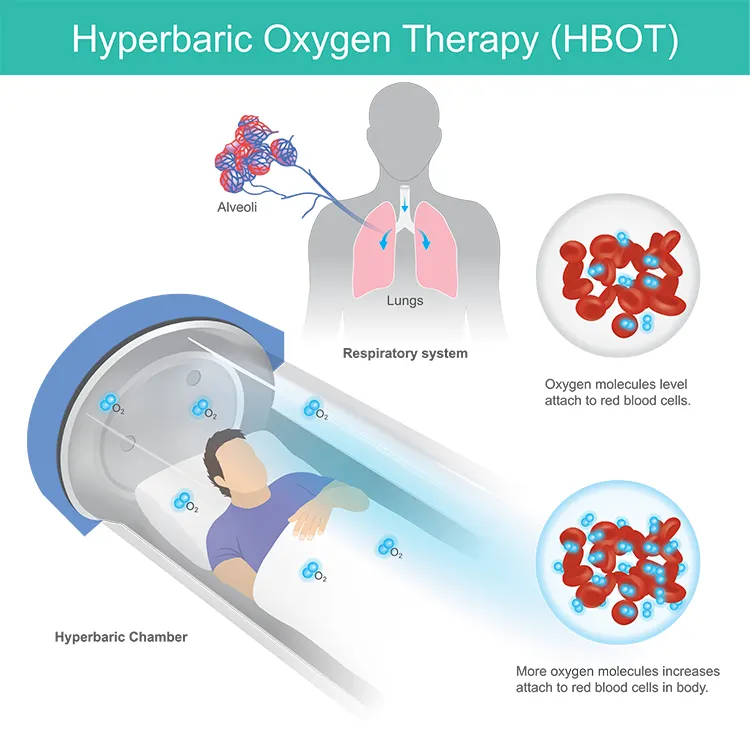
Hyperbaric Oxygen Therapy is a treatment where you breathe oxygen inside a chamber that holds air pressure above normal. The air around you right now is about 21% oxygen. During HBOT you breathe concentrated oxygen through a mask, and the extra pressure changes how your body takes it in.
Here is the simple version. When air pressure goes up, more oxygen can dissolve into your plasma, which is the liquid part of your blood. Your blood then carries that oxygen to tissues all through your body, including areas where blood flow is low after an injury.
What Is Low-Pressure HBOT Meant to Support?
Patients add low-pressure HBOT to their plan with a few goals in mind. Here is what those goals are, stated plainly.
- More oxygen in your blood. Higher pressure lets more oxygen dissolve into your plasma than breathing at normal pressure does. This is basic physics, and it is the main idea behind every kind of HBOT.
- Your body’s own repair process. Healing tissue uses oxygen to do its work. HBOT is meant to support that natural process while you follow the main treatment that targets the source of your pain.
- Your recovery from soreness and swelling. Some patients use HBOT during the stretch when an injury is sore and inflamed. We pair it with care that treats the cause, such as physical medicine or chiropractic care.
What we don’t claim. HBOT is not a cure, and results vary from person to person. We don’t use it to treat concussions, brain injuries, infections, or any specific disease. It does not replace the care your other doctors give you.
After our team reviews your medical history and the treatments you are using, we can decide how HBOT fits into your overall plan. It works as a complementary option that supports, rather than replaces, the interventional, physical medicine, or regenerative care you may already receive.
HBOT at a Glance
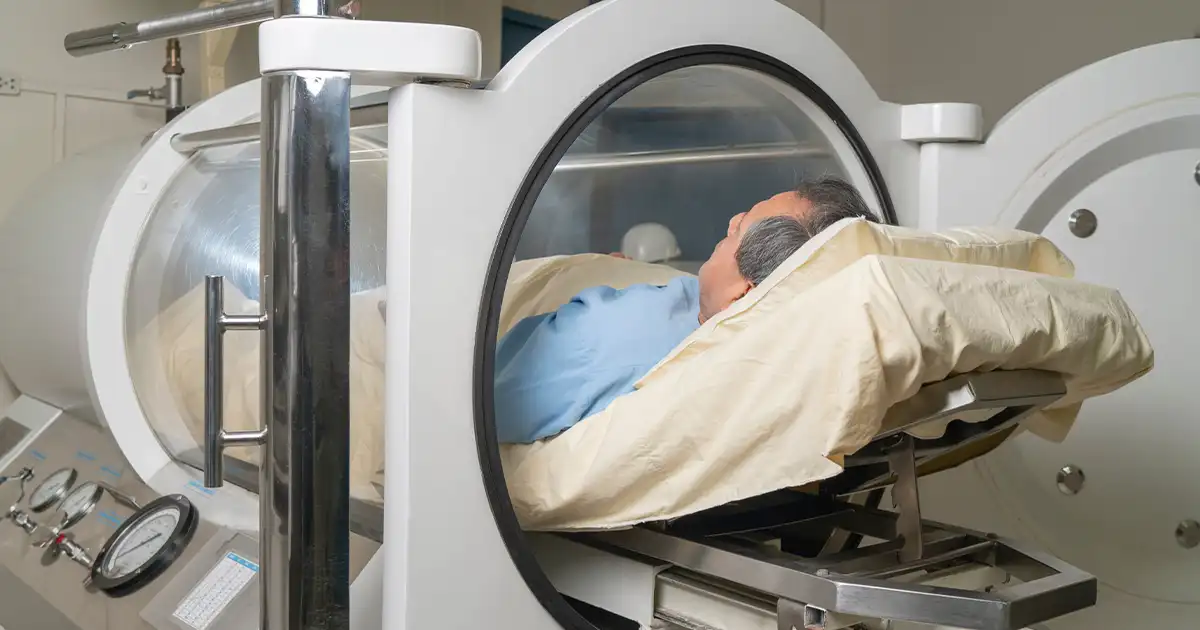
Low-Pressure Chamber: During a session you rest in a low-pressure hyperbaric chamber. The air pressure is raised to about 1.3 ATA, which is about 1.3 times normal air pressure.
Oxygen by Mask: You breathe concentrated oxygen through a mask, compared to the roughly 21% oxygen present in the air we normally breathe.
Dissolved Oxygen: The added pressure helps more oxygen dissolve into your plasma, which carries it to tissues throughout your body, including areas with reduced blood flow.
Supports Your Body’s Repair: Cells use oxygen to make energy and repair tissue. HBOT is meant to support the body’s natural healing processes. That includes your recovery from soreness and swelling.
Session Length: Most sessions run 45 to 60 minutes.
Low-Pressure Hyperbaric Oxygen Therapy at Premier Pain Management
We offer HBOT in a low-pressure hyperbaric chamber at 1.3 ATA, and you breathe oxygen by mask. This lower-pressure format is gentler and more comfortable than the high-pressure systems used in hospitals.
Hospital programs use higher pressure to treat specific medical conditions approved by the FDA. Our low-pressure sessions are not used to treat those conditions. They are a supportive step inside a full care plan. If you think you need hospital HBOT, ask your doctor about a hyperbaric medicine program.
Low-pressure HBOT is non-invasive and easy to tolerate, so it suits many of our pain management patients. Most people find a session relaxing. Research on lower pressure is more limited than research on hospital HBOT, and results vary from person to person.
Who Benefits from Hyperbaric Oxygen Therapy at Our Clinics
HBOT often appeals to patients who are already under our care for back pain, neck pain, joint problems, sciatica, or injury recovery. It gives them one more supportive option while they continue with the primary treatments that address the source of their discomfort.
Active adults who are working back toward normal movement sometimes add it, too. So do people living with long-term pain who want to round out their plan. In each case, a provider reviews your history first and decides whether HBOT makes sense for you.
HBOT is not right for everyone. Tell us if you have a collapsed lung now or in the past, a lung disease such as COPD, a cold or fever, or a recent ear injury or ear surgery. Let us know as well if small spaces make you anxious.
Why Choose Premier Pain Management for Hyperbaric Oxygen Therapy
Patients across the Phoenix metro choose us because we have more than thirty years of experience helping people with pain and injuries. We understand how these issues affect every part of life and we look for practical ways to support real improvement. Hyperbaric oxygen therapy is one more tool we can offer in the same setting where you already receive coordinated care.
HBOT is available at our Mesa and Maryvale (Phoenix) clinics. If your usual clinic does not have a chamber, we can help you book sessions at the one that does. The same team that knows your history can oversee how HBOT fits with your other treatments. We keep the process simple, explain each step, and stay honest about what low-pressure HBOT can and cannot do.
What to Expect During Hyperbaric Oxygen Therapy Sessions
A session starts with a short check-in, then you rest in the chamber while the pressure rises slowly. Here is what to expect, step by step.
- Check-in. We ask how you feel that day. A cold or stuffy nose can make pressure changes harder on your ears, so we may reschedule.
- Getting ready. You change into loose cotton clothing. Oxygen-rich air raises the risk of fire, so lotions, oils, phones, and other electronics stay outside the chamber. The FDA has warned providers about the higher fire risk with concentrated oxygen (FDA letter to health care providers, August 25, 2025).
- Pressure up. The pressure rises a little at a time. Your ears may feel full, like on a plane. Swallowing or yawning usually helps.
- Rest. You breathe oxygen through a mask and relax. Many people nap or listen to something quiet. Our staff stays close by the whole time.
- Pressure down. The pressure returns to normal slowly. Most people go back to their day right after.
Each session lasts 45 to 60 minutes.
We build your schedule around how your body responds. Some patients start with a short series to evaluate benefits, then continue a schedule that supports their ongoing recovery. Others use it more regularly as part of a maintenance plan. We check in regularly and adjust based on your progress and goals.
Frequently Asked Questions About Hyperbaric Oxygen Therapy
How is hyperbaric oxygen therapy at Premier Pain Management different from hospital versions?
We use a low-pressure chamber at 1.3 ATA, while hospitals use higher pressure to treat specific conditions approved by the FDA. Our sessions are a supportive add-on to pain care. They are not a treatment for those conditions.
What does a hyperbaric oxygen therapy session feel like?
Most patients say it feels calm. You breathe oxygen through a mask and can rest. You may notice fullness in your ears as the pressure changes, a lot like flying in a plane. Swallowing or yawning usually clears it. Tell our staff right away if your ears hurt so they can help.
Can I use hyperbaric oxygen therapy together with my other pain treatments?
Yes. HBOT is designed to be used alongside chiropractic care, physical medicine, injections, and regenerative treatments. Your provider decides how to fit it into your plan so it supports your main treatment.
Is hyperbaric oxygen therapy safe?
HBOT is well tolerated by most patients, but like any treatment it has some risks. The most common problem is ear or sinus pressure. Because the chamber holds extra oxygen, fire safety rules matter, and we follow them every session. We review your health history first to make sure HBOT is a good fit for you.
Will insurance cover hyperbaric oxygen therapy at your practice?
Coverage varies by plan and the reason for treatment. Many patients use it as a self-pay supportive option. Our team can discuss costs and check any possible benefits when you call.
How soon after an injury can I start hyperbaric oxygen therapy?
Timing depends on your individual situation. We generally wait until early healing has begun so your body can make good use of the extra oxygen. We will discuss the right starting point during your evaluation.
Can low-pressure HBOT treat a concussion or brain injury?
No. We do not offer HBOT as a treatment for concussion or brain injury. If you have had a head injury, please see a doctor who treats brain injuries.
Do all three Premier Pain Management clinics offer HBOT?
HBOT is available at our Mesa and Maryvale (Phoenix) clinics. If your usual clinic does not have a chamber, we can help you book sessions at the one that does.
Let’s Talk About Whether Hyperbaric Oxygen Therapy Fits Your Plan
If you want extra support while you heal from an injury or manage long-term pain, we’re glad to talk it through. The team at Premier Pain Management has cared for patients in Phoenix, Mesa, and Queen Creek since 1994 with practical, coordinated care that respects your time and real-life goals.
Call any of our offices or reach out through the site. We’ll explain how HBOT works in our clinics, what it can and cannot do, and whether it fits with your current plan.