
Picture this: your knee has been aching for months. You have stretched it, rested it, wrapped it, and maybe even had imaging done that came back unremarkable. Nothing explains it. But here is the part that surprises most people. The problem may not be in your knee at all.
Referred pain from the lower spine is one of the most commonly missed sources of knee discomfort. When a nerve root in your lumbar spine gets irritated or compressed, it does not always announce itself with obvious back pain. Sometimes the only signal is a dull ache, a strange weakness, or a persistent throb sitting right in the knee joint.
This article breaks down exactly how the back and knee are connected, what the warning signs look like, and why treating the right source makes all the difference.
The Spine-Knee Connection Most People Never Consider
Your spine and your knee are not isolated systems. They are linked by the same nerve pathways that run from your lumbar spine all the way down to your lower leg. When something goes wrong higher up in that chain, the pain signal can land anywhere along it, including your knee.
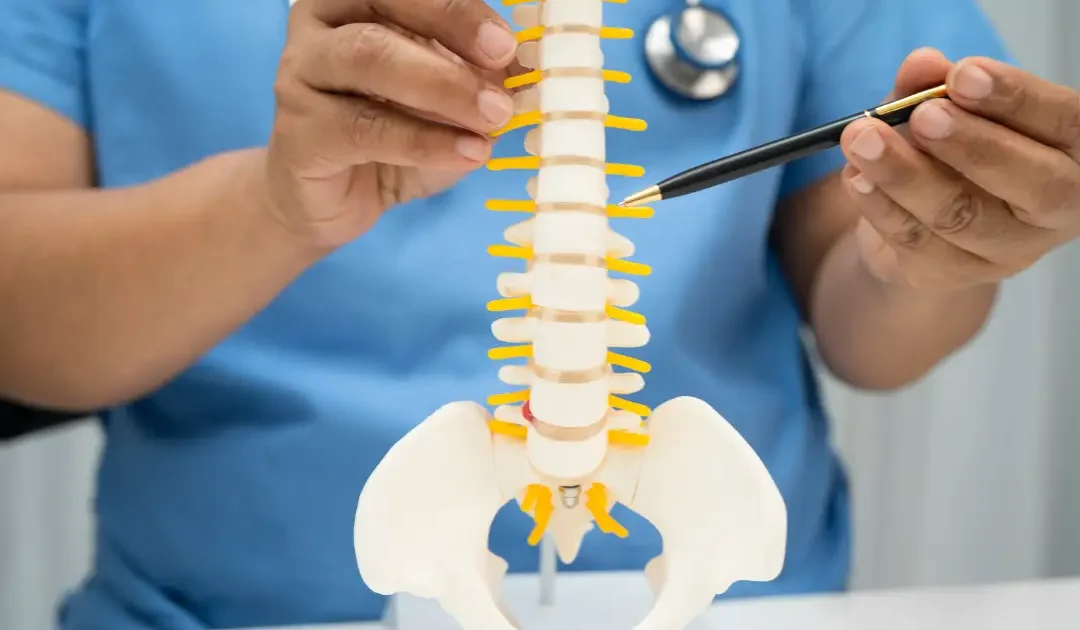
The nerves that exit the lumbar spine at levels L3, L4, and L5 directly supply the muscles, skin, and structures around the knee. A herniated or bulging disc at one of those levels can irritate the nerve root and send pain, weakness, or numbness down to the knee without producing any significant back pain at all.
This is what clinicians call referred pain. The source of the problem is in one location, but the brain interprets the pain signal as coming from somewhere else entirely.
5 Signs Your Knee Pain May Be Coming From Your Spine
- Knee pain without a clear knee injury
- Pain that travels from the back or buttock down to the knee
- Weakness without swelling
- Numbness or tingling near the knee
- Pain that changes with back position
If two or more of these patterns apply to you, a spinal evaluation is a logical next step before pursuing knee-specific treatments.
Back Conditions That Commonly Cause Knee Pain
Lumbar Disc Herniation
When a disc bulges or ruptures, it can press against a nearby nerve root. Depending on which nerve is affected, pain can settle behind the knee or along the thigh.
Lumbar Spinal Stenosis
Narrowing of the spinal canal can compress multiple nerves, leading to weakness or aching in the legs, often noticeable after standing or walking.
Facet Joint Dysfunction
Inflammation in the small joints of the spine can refer pain into the hip, thigh, and sometimes the knee.
Degenerative Disc Disease
As discs lose height over time, nerve irritation can develop gradually, leading to knee discomfort without obvious back pain.
Sciatic Nerve Irritation
Sciatic nerve compression can cause pain that travels past the knee, sometimes presenting primarily as discomfort behind the knee.
How Is Spinal-Referred Knee Pain Diagnosed?
Diagnosing referred knee pain requires a full evaluation, not just a knee exam. This often includes reviewing symptom patterns, checking nerve function, and assessing movement to determine where the pain is truly coming from.
Treatment Options When the Spine Is the Source
When the spine is identified as the cause, treatment focuses on relieving pressure on the affected nerves.
- Epidural steroid injections
- Nerve blocks
- Facet joint injections
- Chiropractic care or decompression
- Physical medicine and rehabilitation
Each approach is designed to address the underlying source rather than the symptom location.
The Bottom Line
Knee pain that does not respond to knee-focused treatment deserves a different perspective. If imaging is normal and there is no clear injury, the lumbar spine may be the true source.
The nerves that supply the knee originate in the lower back. When those nerves are irritated, pain can show up in the knee without obvious back symptoms.
If your knee pain has not improved with traditional care, exploring a spinal evaluation can provide clarity and a more effective path forward.
Call or text (480) 954-2491 or schedule a consultation online. Same-day appointments available.