
Epidural Steroid Injections in Phoenix, Mesa & Queen Creek
When neck or lower back pain begins traveling into the arms or legs, it often signals nerve irritation in the spine. At Premier Pain Management Arizona, epidural steroid injections are used as part of a comprehensive, image-guided interventional treatment plan designed to reduce inflammation, relieve nerve pain, and help patients return to daily function.
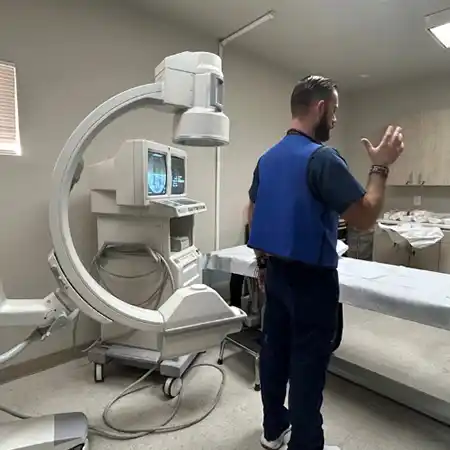
Our board-certified pain specialists perform epidural injections under fluoroscopic guidance for precision, safety, and optimal placement of medication.
What Is an Epidural Steroid Injection?
An epidural steroid injection delivers anti-inflammatory medication directly into the epidural space — the area surrounding the spinal cord and nerve roots.
By placing medication at the source of inflammation, we can:
- Calm irritated nerve roots
- Reduce radiating arm or leg pain
- Improve tolerance for movement
- Create a therapeutic window for rehabilitation
Unlike oral steroids that circulate throughout the body, epidural injections target a specific region of the spine, minimizing systemic side effects.
Conditions We Treat with Epidural Injections
At Premier Pain Management Arizona, epidural injections are commonly used to treat:
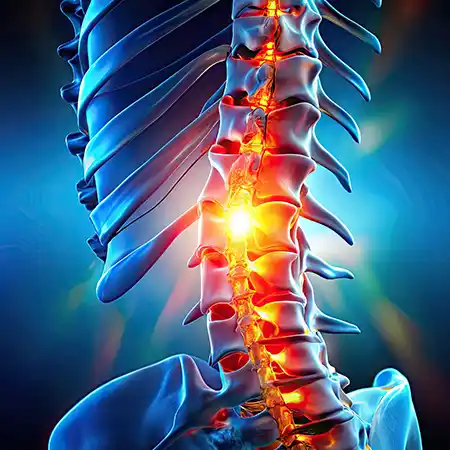
- Herniated or bulging discs
- Spinal stenosis
- Lumbar radiculopathy (sciatica)
- Cervical radiculopathy (arm pain from neck nerves)
- Degenerative disc disease
- Post-surgical nerve irritation
Each patient undergoes a full clinical evaluation and imaging review before a procedure is recommended. We do not use a one-size-fits-all approach.
Cervical vs. Lumbar Epidural Injections
Cervical Epidurals (Neck Region)
Used when nerve compression in the cervical spine causes:
- Neck pain
- Shoulder pain
- Arm numbness or tingling
Lumbar Epidurals (Lower Back Region)
Used when nerve irritation in the lower spine causes:
- Low back pain
- Hip pain
- Sciatica
- Leg weakness or numbness
The anatomical approach differs depending on the region of the spine, and our physicians determine the safest and most effective technique based on imaging and symptoms.
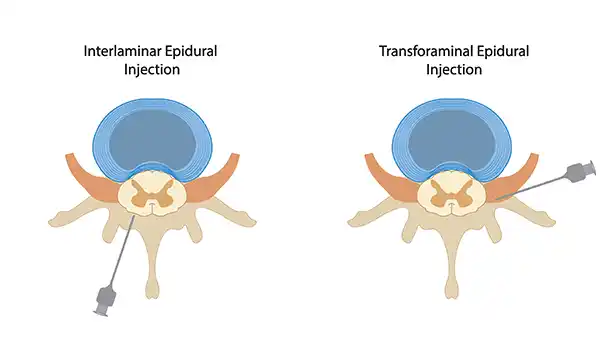
Interlaminar vs. Transforaminal Epidural Injections
Interlaminar Epidural
Medication is delivered through the back of the spine and spreads across a broader area. This is useful when multiple nerve roots are inflamed.
Transforaminal Epidural
Medication is delivered alongside a specific exiting nerve root. This is ideal when imaging shows a single compressed nerve causing targeted symptoms.
Our specialists select the technique based on precision targeting and patient safety.
What to Expect After an Epidural Injection
Most patients go home within an hour. It is normal to feel some numbness or mild weakness in the legs or arms from the numbing medicine. This goes away within a few hours. Some people feel sore at the injection site for a day or two. Ice and over-the-counter pain medicine can help with this.
The steroid usually takes two to seven days to fully kick in. Patients should not expect it to work right away. Light activity is fine after the first day, but heavy lifting and hard workouts should wait for 24 to 48 hours. A follow-up visit gives the doctor a chance to check how things are going and talk about next steps. This could mean more injections, starting physical therapy, or making changes to the treatment plan.
How Long Epidural Steroid Injections Last
How long the relief lasts varies from person to person. Some patients feel better for a few weeks. Others have relief that lasts several months. In most cases, the effect of the steroid lasts about three to twelve weeks. It depends on how bad the swelling is, what type of steroid is used, and how each person responds.
Many patients notice that the relief lasts longer after a second or third injection. This happens because the overall swelling keeps going down over time. The period of pain relief is often the best time to work on physical therapy and exercise. These activities build up the spine and help keep the pain from coming back. In many cases, the gains made during this window stick around even after the shot wears off.
When Are Epidural Injections Recommended?
We may recommend an epidural steroid injection when:
- Nerve-related pain interferes with daily activities
- Conservative treatments have not provided adequate relief
- Imaging confirms nerve compression
- Surgery is not immediately necessary
Our goal is always to exhaust appropriate non-surgical interventional options before considering surgical referral.
Are epidural injections the same as cortisone shots?
Cortisone injections (sometimes misspelled online as “cortizone injections”) are commonly used to treat inflammation and pain in the spine, joints, and soft tissues. Epidural injections contain a corticosteroid medication similar to cortisone. While many patients refer to them as cortisone injections, the medication is placed specifically into the epidural space around spinal nerves to treat conditions such as sciatica and herniated discs.
Why Choose Premier Pain Management Arizona?
Patients throughout Phoenix (Maryvale), Mesa, and Queen Creek choose our team because:
- Procedures are performed by experienced interventional pain specialists
- All injections are image-guided for precision
- We provide multiple treatment options under one roof
- We coordinate care across disciplines
- We prioritize patient education and safety
We treat the source of pain — not just the symptom.
Frequently Asked Questions About Epidural Steroid Injections
Are epidural steroid injections painful?
Most patients say the procedure is more uncomfortable than painful. The doctor numbs the skin and tissue first, which cuts down on pain during the injection. Some patients feel a pressure sensation as the medicine goes in. The whole thing takes 15 to 30 minutes. Many patients say it was easier than they expected.
How many epidural injections can I receive?
Most doctors suggest no more than three to four injections in a year. This limit exists because too much steroid over time can weaken nearby bones and tissue. Injections are usually spaced at least two to four weeks apart. This gives the doctor time to see how the patient responds before giving another one. If the first shot helps, follow-up shots may extend the relief.
What are the risks of an epidural steroid injection?
Epidural steroid injections are low-risk when done by a skilled doctor using imaging guidance. The most common side effects are short-lived. They include soreness at the injection site, a mild headache, and a brief uptick in pain before the steroid starts working. Rare risks include infection, bleeding, and nerve injury. Patients with uncontrolled diabetes, active infections, or bleeding disorders may not be good candidates. A full medical review is done before the procedure is scheduled.
Schedule a Consultation
If radiating neck or back pain is limiting your life, an epidural steroid injection may help restore comfort and mobility.
Schedule an evaluation at Premier Pain Management Arizona in Phoenix, Mesa, or Queen Creek to determine whether this treatment is appropriate for your condition.