
Knee Pain Treatment
Knee pain doesn’t just hurt, it changes the way you move through your entire day. It’s the hesitation at the bottom of the stairs. It’s cutting a walk short, skipping the hike, or lying awake at night wondering if it’s ever going to get better. At Premier Pain, we see patients like this every day, and we know that most of them don’t need surgery. They need the right diagnosis, the right care team, and a treatment plan built around getting their life back.
Our locally owned clinics in Phoenix, Mesa, and Queen Creek bring together chiropractic care and medical pain management under one roof — so you get a complete picture of what’s causing your knee pain, and a real plan to fix it without surgery or opioids.
Where Is Your Knee Pain?
Understanding the Location Can Point to the Cause
Not all knee pain is the same — and where you feel it often tells us a great deal about what’s causing it. Use the descriptions below to identify your pain pattern, then call us. We’ll do the rest.
Pain Behind the Knee
Back of Knee Pain
Pain behind the knee — sometimes called posterior knee pain — is one of the most common complaints we see. It often feels like a deep ache or tightness behind the joint, and it tends to get worse when you try to fully straighten your leg. This type of pain is frequently caused by a Baker’s cyst, hamstring tendon irritation, or tightness in the soft tissues connecting your lower back and hip to the knee. Because the root cause is often above the knee, chiropractic evaluation of the pelvis and lumbar spine is an important part of getting a complete diagnosis.
Inner Knee Pain
Pain on the Inside of Your Knee
Inner knee pain — also called medial knee pain — typically shows up as soreness or tenderness along the inside edge of the joint. It can occur with or without visible swelling, and it often worsens when climbing stairs, pivoting, or getting up from a seated position. The most common causes include medial collateral ligament (MCL) strain, pes anserine bursitis, and arthritis affecting the inner compartment of the knee. In some patients, this pain is actually referred from a tight hip or a pelvic misalignment — something a thorough chiropractic evaluation can quickly identify.
Outer Knee Pain
Pain on the Outside of Your Knee
Pain on the outside of the knee is most often caused by IT band syndrome, a frustrating overuse condition that’s especially common in runners, cyclists, and hikers here in the Phoenix Valley. The iliotibial band runs along the outer thigh and attaches near the knee, and when it becomes tight or inflamed, it causes a sharp, burning pain on the outer knee that gets worse with activity. Lateral knee pain can also stem from a lateral meniscus issue or irritation of the lateral collateral ligament. Both chiropractic care and targeted soft tissue treatment can significantly reduce IT band tension and restore normal movement patterns.
Front Knee Pain and Kneecap Pain
Pain at the front of the knee
Front knee pain including pain directly behind or around the kneecap, is often called anterior knee pain or patellofemoral pain. It’s especially noticeable when going down stairs, squatting, or sitting for long periods with the knee bent. This type of pain is often related to how the kneecap tracks in its groove, which can be influenced by muscle imbalances in the hip and thigh. Strengthening the surrounding muscles and correcting alignment issues through physical medicine and chiropractic care can make a significant difference.
Knee Pain When Bending, Walking, or Going Down Stairs
You Don’t Have to Manage Around It
One of the most useful clues in diagnosing knee pain is understanding exactly when and how it shows up. The patterns below are among the most common we hear from patients — and each one can point us toward the underlying cause.
Knee Pain When Bending or Squatting
If your knee hurts when you bend it, while squatting, kneeling, or even just sitting down, the pain is often a signal of cartilage wear, patellofemoral irritation, or fluid buildup in the joint. Knee pain when squatting is particularly common in patients with early-stage osteoarthritis or meniscus irritation. The good news is that both conditions respond well to conservative, non-surgical care when caught before significant deterioration occurs.
Knee Pain When Walking or Going Downstairs
Knee pain when walking, particularly going downstairs, is one of the telltale signs that the kneecap isn’t tracking properly, or that the cartilage on the underside of the kneecap is under excessive pressure. Many patients notice this most on the descent, when the knee is absorbing the highest load. Addressing the hip and core strength that guides kneecap movement, along with spinal alignment, is often the key to lasting relief.
Knee Pain After Running or Physical Activity
Knee pain from running is almost always a biomechanical issue — meaning the problem isn’t just the knee itself but how the whole kinetic chain (foot, ankle, hip, pelvis, and spine) is functioning during movement. Our providers evaluate your entire alignment, not just the painful joint. Whether it’s IT band syndrome, patellofemoral pain, or a stress-related injury, we build a treatment plan that gets you back to the activities you love.
Knee Pain at Night
If your knee pain is worst at night, making it hard to fall asleep or waking you up when you shift positions, it’s often a sign of inflammatory activity or fluid in the joint, both of which intensify when you’re at rest and there’s less competing sensation. Nighttime knee pain is frequently associated with osteoarthritis, bursitis, and sometimes referred nerve pain from the lumbar spine. It’s also a signal that your body isn’t recovering well, and that professional care is overdue.
Arthritis and Bone-on-Bone Knee Pain
Osteoarthritis is the most common cause of chronic knee pain, especially in patients over 50. As the cartilage between the bones gradually wears down, the joint loses its cushioning, and in advanced cases, bone begins to rub directly against bone. This can cause deep, aching pain, grinding or crunching sensations, and significant stiffness, especially in the morning or after sitting for a while.
If another provider has told you that you have bone-on-bone knee pain and that surgery is your only option, we respectfully disagree. Our team has helped many patients with advanced arthritis find significant, lasting relief through non-surgical pain management, including interventional procedures that reduce inflammation, chiropractic care that improves joint mechanics and offloads the affected compartment, and physical medicine that rebuilds supportive muscle strength. Surgery is sometimes the right answer, but it should never be the first answer.
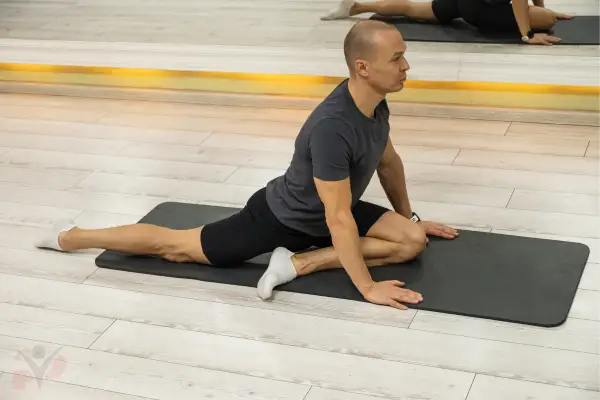
IT Band Syndrome and Sports-Related Knee Pain
IT band syndrome is one of the most common running and cycling injuries in the Phoenix area, and it’s frequently misdiagnosed or undertreated. The iliotibial band, a thick band of connective tissue running from the hip to the outer knee, becomes tight and inflamed from repetitive motion, especially in people who run, hike, or cycle on hilly terrain. Chiropractic care addresses the hip and pelvic mechanics that drive IT band tension, while soft tissue and physical medicine treatments reduce the inflammation directly.
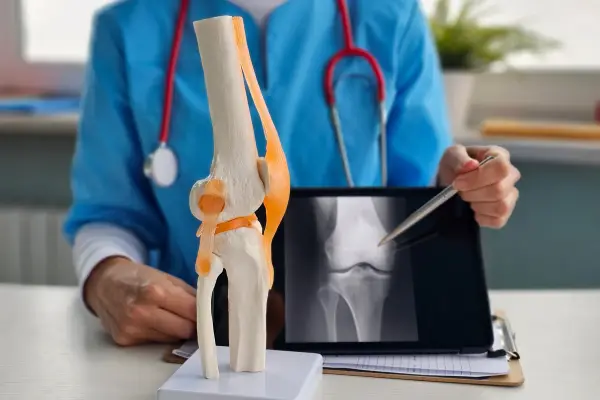
Ligament, Tendon, and Cartilage Injuries
Knee sprains, meniscus tears, and tendon inflammation are among the most common causes of knee pain in both active patients and those who simply stepped wrong. Many of these injuries are treated aggressively with surgery when they don’t need to be. Our team evaluates the extent of injury through physical examination and in-clinic imaging, and in many cases can relieve pain and restore function through conservative, non-surgical care.
Can Sciatica Cause Knee Pain?
Yes. Sciatic Nerve Pain is one of the most commonly missed diagnoses in knee pain patients. The nerves that travel to the knee originate in the lumbar spine (lower back). When those nerves become compressed or irritated, due to a herniated disc, spinal misalignment, or sciatic nerve involvement, pain can radiate down the leg and into the knee, even when the knee itself has no structural damage.
This is one of the reasons why a thorough spinal evaluation is part of every new patient assessment at Premier Pain. If your knee pain isn’t responding to local treatments, or if it’s accompanied by any lower back discomfort, leg numbness, or tingling, nerve-referred pain from the spine may be the missing piece. Our integrated team, chiropractors and pain management physicians working together, is uniquely equipped to find and treat this kind of root-cause problem.
Why Women Experience Knee Pain Differently

Can a Chiropractor Help With Knee Pain?
Yes. Often more effectively than patients expect. Many people assume that chiropractors only treat back and neck pain, but the musculoskeletal system is an interconnected whole. Your knee doesn’t function in isolation, it depends on proper alignment from the pelvis and hip above, and stable mechanics from the ankle and foot below. When any of those relationships are off, the knee compensates, and compensation leads to pain.
Chiropractic care for knee pain works in two ways. First, direct adjustments to the knee joint can improve range of motion, reduce joint restriction, and calm inflammation in the surrounding tissues. Second, this is where Premier Pain’s integrated approach makes a real difference, chiropractic evaluation of the spine and pelvis can identify referred pain patterns and structural contributors that would otherwise be missed entirely.
What Happens at Your First Chiropractic Visit for Knee Pain
Your first appointment includes a complete evaluation of your knee, hip, and spinal alignment — not just the area that hurts. Your provider will assess your gait, range of motion, and joint stability, and may recommend in-clinic X-rays to get a clearer picture. From there, you’ll receive a personalized care plan that may combine chiropractic adjustments, soft tissue work, and coordination with our pain management team if interventional care is appropriate.
Knee Pain Treatment Options at Premier Pain Management
Every treatment plan at Premier Pain is built around one principle: find the actual source of your pain and address it directly. We don’t prescribe opioids as a primary solution, and we don’t recommend surgery before exhausting non-invasive options. Here’s what comprehensive, non-surgical knee pain treatment looks like at our clinics.
Chiropractic Adjustments and Joint Mobilization
Our chiropractors use precise, controlled adjustments to restore proper alignment in the knee joint and the structural areas that influence it, the pelvis, sacrum, and lumbar spine. For patients with knee pain driven by misalignment or referred nerve involvement, chiropractic care alone can produce significant relief. For others, it’s an essential part of a multi-modal care plan.
Non-Opioid Pain Management and Interventional Procedures
When pain limits your ability to function or participate in conservative treatments, our board-certified pain management providers offer a range of targeted interventional options, without opioids. These include trigger point injections, nerve blocks, and medial branch blocks, all administered in-clinic. These procedures reduce pain and inflammation at the source, creating a window for the body to heal and for other therapies to be more effective.
Physical Medicine and Rehabilitative Care
Rebuilding strength in the muscles that support the knee, the quadriceps, hamstrings, glutes, and hip stabilizers, is one of the most important parts of long-term knee pain relief. Our physical medicine approach goes beyond generic exercise handouts. We design progressive rehabilitative programs specific to your condition, your goals, and the realities of your daily life here in the Phoenix area.
Advanced Therapies: Cold Laser, Shockwave, and Decompression
For patients who need more than adjustments and exercise, we offer several advanced, non-surgical modalities. Cold laser therapy uses targeted light energy to reduce inflammation and accelerate tissue healing at the cellular level. Shockwave therapy delivers high-energy sound pulses that break up scar tissue and stimulate the body’s own repair processes. Decompression therapy gently distracts the knee joint to reduce pressure, improve circulation, and allow nutrients to reach damaged tissue. These therapies are particularly effective for chronic knee conditions that haven’t responded to more conventional approaches.
Why Choose Premier Pain for Knee Pain
Locally Owned Clinics, Not a Corporate Chain
Premier Pain Management is locally owned and operated, which means the people treating you have a real stake in this community. We’re not a distant corporate franchise with rotating staff and standardized protocols. Our providers live and practice here in the Phoenix Valley, and our commitment to patient outcomes is personal, not contractual.
Board-Certified Providers With 30+ Years of Combined Experience
Our team includes board-certified physicians specializing in physical medicine and rehabilitation, pain medicine, and interventional pain management, working alongside licensed chiropractors under one roof. With more than 30 years of combined experience and deep expertise in both conservative and interventional care, our providers have seen and treated nearly every presentation of knee pain. You benefit from that collective knowledge from your very first appointment..
Same-Day Appointments | Most Insurance Accepted | Spanish-Speaking Staff
We know that when knee pain limits your daily life, waiting weeks for an appointment isn’t acceptable. Premier Pain offers same-day scheduling, and we accept most major insurance plans. Our team includes Spanish-speaking staff, and our clinics in Phoenix (Maryvale), Mesa, and Queen Creek are conveniently located to serve patients across the Valley.
Frequently Asked Questions About Knee Pain
Can a chiropractor help with knee pain?
Yes. Chiropractors are trained to evaluate and treat the musculoskeletal factors that contribute to knee pain, including joint restriction in the knee itself and structural issues in the hip, pelvis, and spine that place uneven stress on the joint. Many patients with knee pain see significant improvement through chiropractic care alone. For more complex cases, chiropractic care works best as part of an integrated plan that includes medical pain management.
What is the fastest way to relieve knee pain?
For immediate relief, ice applied for 15–20 minutes can reduce acute swelling, and over-the-counter anti-inflammatories can take the edge off. But for lasting relief, especially if your pain has lasted more than a few weeks, the fastest path is an accurate diagnosis followed by targeted treatment. Premier Pain offers same-day appointments, in-clinic imaging, and an integrated care team that can often begin treatment on your first visit.
What helps bone-on-bone knee pain without surgery?
How long does knee pain treatment take to work?
Ask Us A Question. We have Answers.